

Beneath the historic rooms and courtyards of Casa Rocca Piccola lies a network of World War II shelters carved deep into the rock beneath the palace. These underground spaces offer an important insight into how residents of Valletta sought refuge during the devastating air raids that struck Malta during World War II.
During the war, Malta became one of the most heavily bombed places in Europe. Valletta and the surrounding harbour areas were frequent targets, forcing residents to seek protection in underground shelters and bomb shelters across the city. Today, the Valletta World War II shelters beneath Casa Rocca Piccola allow visitors to better understand this significant period in Malta’s history.
For those interested in history, or exploring things to do in Valletta, these shelters provide a direct connection to the lived experiences of the city’s residents during the war.
Valletta During World War II
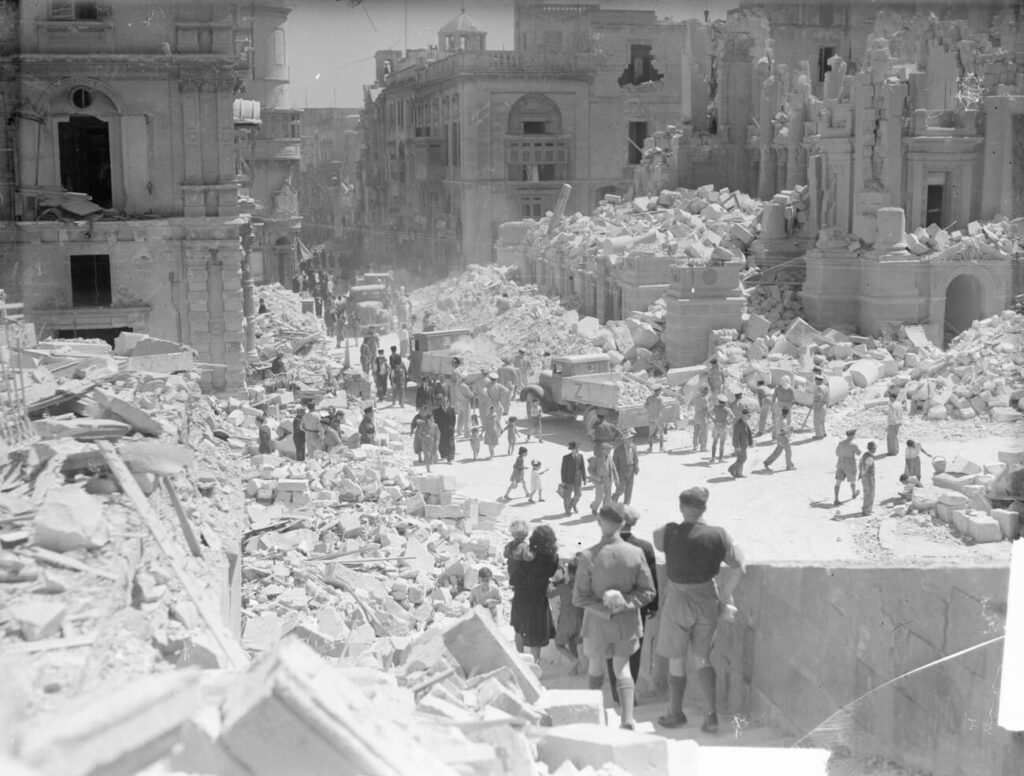
During World War II, Malta played a crucial strategic role in the Mediterranean. Its location between Europe and North Africa made the island an important base for Allied operations, while also making it a key target for Axis bombing campaigns.
Between 1940 and 1942, Malta endured sustained aerial bombardment. Valletta, as the island’s capital and a central harbour city, was among the most heavily affected areas. At the height of the attacks in April 1942, as many as 15 air raids a day struck the island.
These repeated attacks caused widespread destruction across Valletta. Homes, churches, and historic buildings were damaged, and daily life was shaped by the constant need to seek shelter.
To survive these conditions, residents relied heavily on bomb shelters and underground shelters carved into the limestone rock beneath the city.
Why Bomb Shelters Were Essential in Valletta
Valletta is built on a solid limestone foundation, which made it possible to excavate underground spaces beneath buildings and streets. Many of these spaces originally served as wells, storage areas, or quarries used during the construction of the city.
During World War II, these underground spaces were adapted to provide protection from air raids. Wells, tunnels, and cellars were enlarged and reinforced to create safer conditions for those sheltering below ground.
Families often spent extended periods underground, sometimes for several hours at a time, waiting for air raids to pass. In many cases, these shelters became shared spaces used by entire communities.
Across Valletta, thousands of residents depended on these WWII shelters. One of the most well-preserved examples can still be explored beneath Casa Rocca Piccola, one of Valletta’s most historic houses.
The Bomb Shelters Beneath Casa Rocca Piccola
Casa Rocca Piccola is a 16th-century palace built over 400 years ago. Beneath the house are a number of wells carved into the rock, originally forming part of the quarry used during its construction.
Because of the size of the house, the property contains four underground wells, two of which were converted into World War II bomb shelters.
These shelters were adapted to provide protection during air raids and remain largely intact today, offering visitors a clear view of how such spaces were used during the war.
Bomb Shelter 1: Protection Beneath the Palace
The first shelter visitors encounter is the smaller of the two Valletta WWII shelters beneath Casa Rocca Piccola.
This shelter could accommodate approximately thirty people. It was reinforced with a concrete ceiling supported by steel beams and a central column, designed to strengthen the structure against nearby explosions.
Although built to withstand significant impact, not all shelters in Malta survived the intensity of the bombing, and some did collapse during the war.
This space reflects the practical measures taken to improve safety within underground shelters during World War II.
Bomb Shelter 2: A Community Refuge
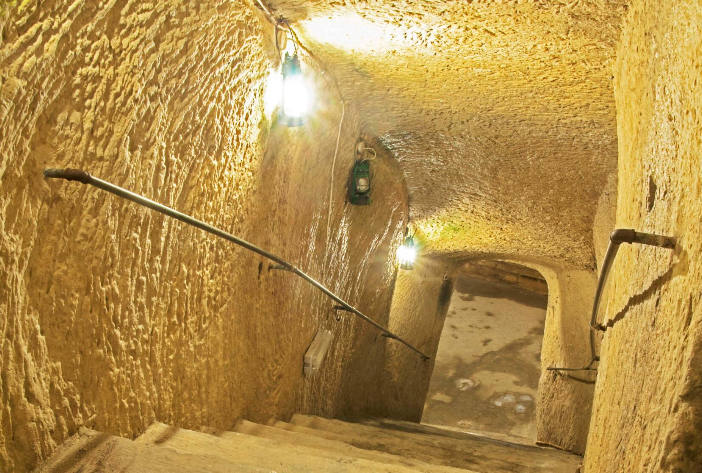
The second and larger shelter provides further insight into how these underground spaces were adapted.
Part of the concrete ceiling has been removed, allowing visitors to see the construction. Above the ceiling, tightly packed soil and small stones were used to help absorb the impact of bomb blasts.
While the shelter could normally accommodate around thirty people, during periods of intense bombardment more than 100 individuals would gather inside.
The walls of the shelter contain crosses carved into the stone, marking where individuals or families positioned their sleeping areas. These carvings are a reminder of the personal and spiritual responses to the uncertainty of daily life during the war.
Because this was one of the largest shelters in the area, it was also used for daily Mass, with residents entering through connecting tunnels. A temporary wooden altar would be set up beneath a niche carved into the rock.
Lighting within the shelter was provided by hurricane lamps fuelled with paraffin, offering minimal but essential illumination.
The Private Family Shelter
In addition to the larger communal shelters, Casa Rocca Piccola also contains a private family shelter.
This shelter was created in 1935 by Antonio Cassar Torregiani for his family and servants. It was intended as an emergency refuge for those within the house during an air raid.
The entrance features a zig-zag passage, designed specifically to prevent the direct impact of a blast entering the shelter.
During World War II, while many residents left Valletta, others remained and adapted underground spaces beneath their homes. The shelter at Casa Rocca Piccola may have been one of the earliest private bomb shelters constructed in Malta.
Following the passage leads through a small chamber carved into the rock and eventually opens into the garden of the house.
Exploring Valletta’s WWII Shelters Today
Today, the World War II shelters beneath Casa Rocca Piccola form an important part of the visitor experience.
These underground spaces provide a clear and tangible understanding of how residents of Valletta lived through the war. Features such as carved markings, reinforced structures, and narrow passageways remain visible, preserving the historical integrity of the shelters.
For those interested in Malta World War II history, the shelters offer a rare opportunity to explore authentic wartime environments.
As part of the wider experience of visiting the house, they contribute to a broader understanding of Valletta’s past and remain one of the more distinctive historical attractions in Valletta.
Leave a Reply